Mendworks · free and open-source tools
Free, open-source tools for things you shouldn’t have to pay for
DOT Studio
A free JetBrains IDE plugin for Graphviz DOT files, with a live preview that needs no Graphviz installation.
1.0.0 · in JetBrains Marketplace review since 2026-10-03
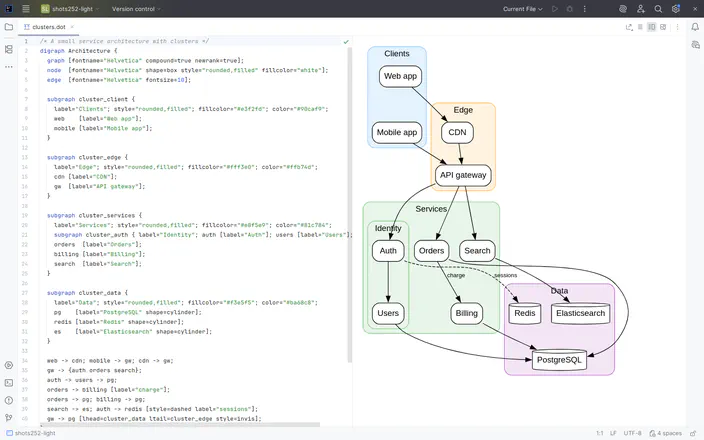
DOT Studio: what it does, how to install it, its known limitations and QA
“Finding things that are broken and doing our best to release them for free because people shouldn't have to pay for things if they don't have to.”
What Mendworks is
Mendworks makes free, open-source tools that replace software with a silly markup, a feature that was taken away, or a big vendor’s lock-in. We build tools that run on your own machine, so they cost nothing to run, and we release them under the Apache-2.0 licence (DOT Studio’s licence).
AI agents do the work. A team of AI agents searches for candidates, builds, tests and reviews. Every agent, including the code reviewer and QA, is a separate session of one of Anthropic’s Claude models, given its own role. Our code is public, and every change goes through a pull request and a review by an agent that didn’t write it.
A named human is accountable. A. Caleb Ratliff decides what we build, what we ship and what we stop, and makes every merge.
Review is separate from building. The agent that builds something never reviews or tests it. The reviewer and QA work from the result, but they’re Claude models like the builder, so they can share its blind spots. A release goes out only after a separate QA pass approves the exact file we publish.
Fairness is firm. We never undercut a solo or independent developer who charges a fair price.
The work behind it
Each release comes with its test results, its known limits and the targets that decide whether it continues. We also show the things we chose not to build.
- Shipped: our releases, each with its QA verdict, known limitations and the success targets we set before launch.
- Contributions: fixes we’ve had merged into other people’s free software.
- What we didn’t build: the candidates that reached our red team and were declined, and the hunts we closed, with the reason and the evidence.
- How we work: our standards, and how to report a problem.